

Useful backlinks for local business give a reader a reason to visit your website. It might connect a supplier to an authorised reseller, an association to a genuine member or a publication to a helpful business resource. The strongest starting point is a real relationship or a page worth referencing, not a package promising hundreds of links.
This guide explains how to build a manageable outreach programme for a UAE business. You will identify suitable opportunities, prepare something useful, contact the right person and verify what was published. It does not promise a ranking position or recommend buying links that pass ranking credit. Paid promotion and earned editorial references are different activities and should be treated differently.

Understand what you are trying to earn
A backlink is a link from another website to your website. Its business value depends on the context, the reader and the destination. A link from a relevant supplier page can bring a qualified enquiry even if a third-party authority score looks modest. A high-score site with an unrelated audience may deliver little practical value.
Set two outcomes: relevant referral opportunities and a credible public reference. Track search visibility separately because a single link does not establish the cause of a ranking change. Do not use the number of links as the only success measure; repeated links from one low-value template can inflate a report without improving customer discovery.
Step 1 Audit the references you already have
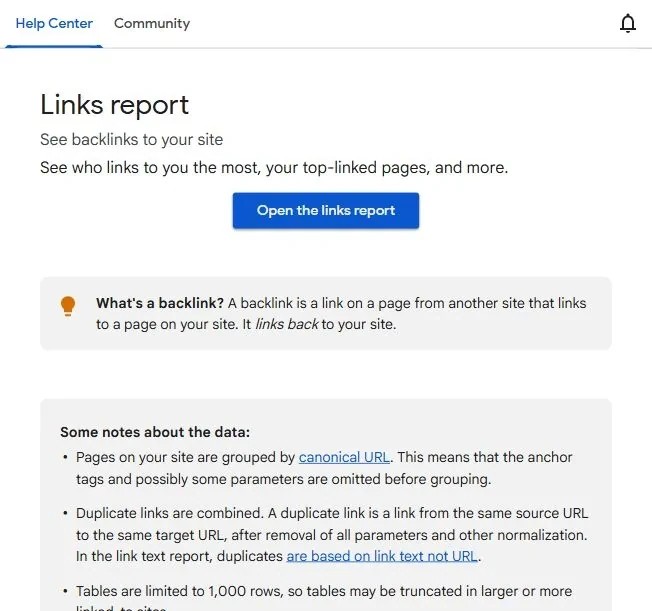
Review your own Search Console Links report and any limited backlink data available for your verified site. Keep the referring page, destination, visible context and date checked. Reports are samples or database views, not a complete live inventory of every link on the web.
Open the important referring pages manually. Confirm the link still exists, points to a useful live destination and describes the business accurately. If an old URL redirects correctly, it is not automatically broken. If a referenced resource has moved, update the destination where you can or maintain an appropriate redirect.
Do not begin by submitting a disavow file because a third-party score labels a domain suspicious. That is a separate advanced decision. First establish whether there is a real problem, what control you have and what Google’s current guidance recommends.
Open full screenshot
Step 2 Build a relationship inventory
List genuine suppliers, manufacturers, distributors, trade associations, event organisers, professional partners and publications your team already works with. Add the relationship owner and the reason the business might belong on their website. Do not invent a partnership merely because the target site has a useful metric.
A hypothetical installation company may be eligible for a manufacturer’s installer directory. A genuine association member may have a member page. A business that contributes a useful presentation may receive a reference in event materials. Eligibility comes first; the backlink is a possible consequence of a legitimate reference.
Ask internal colleagues before contacting a partner. Someone may already manage the listing or have an active conversation. A coordinated request is less intrusive than several people asking the same organisation for a link.
Step 3 Evaluate the page rather than the domain alone
Open the exact page where a reference could appear. Is it useful and maintained? Does it serve your target audience? Are the listed businesses or resources relevant? Can a customer understand why your business belongs there? Reject opportunities that require deceptive claims or place your business beside unrelated spam.
Record the proposed destination on your own site. A supplier directory should normally point to a clear company or relevant service page, while a resource citation should point to the resource. Sending every reference to the homepage can make the visitor work harder to find what was promised.
| Opportunity | Evidence to check | Suitable approach |
|---|---|---|
| Manufacturer partner directory | Genuine current status and listing criteria | Ask the relationship owner about the official listing process. |
| Professional association | Membership and public-profile rules | Complete the accurate member profile. |
| Industry resource page | Audience relevance and editorial policy | Suggest a genuinely useful resource with a clear explanation. |
| Business event | Actual participation and organiser permissions | Provide approved speaker or contribution information. |
| Unlinked business mention | Accurate existing mention on a real page | Ask whether a useful reference link can be added. |
Step 4 Create a resource someone could reasonably reference
Choose a recurring question that your business can answer with evidence. Useful resources include a product compatibility worksheet, an installation preparation checklist, an original process explanation or a carefully maintained comparison. The resource should be useful without requiring a sales call to understand its basic purpose.
State who prepared it, when it was checked and what it does not cover. If it contains a calculation, show the assumptions. If it uses project screenshots, obtain the necessary permission and remove private data. If you do not have measured results, explain the process without inventing percentages or testimonials.
Put the resource on a stable, crawlable page and check mobile readability. Add a clear title, a short explanation and a useful next step. A file can support the page, but a naked download without context is harder for a reader to evaluate and for you to update responsibly.
Open full screenshot
Step 5 Find the right contact through public channels
Use the target site’s published editorial, partner or membership contact route. Read its submission guidelines first. A general sales inbox may not be the right destination for a resource suggestion. Do not scrape private contact details or assume that an address found in an old document is intended for unsolicited marketing.
Record the contact source and the purpose of the request. Keep the list small enough to personalise properly. Your outreach log should include the target page, reason for relevance, contact route, message date, response and next action, without unnecessary personal information.
Before sending anything, check that the relationship owner approves the representation. This guide supplies a template; it does not authorise automatically sending messages on behalf of a business. The business should review and send through its normal communication process.
Step 6 Write a specific and honest request
An effective message explains the reader benefit and gives the recipient enough context to decide. Do not claim to be a regular reader unless that is true, and do not offer a fake testimonial in exchange for a link.
Illustrative email: “Hello, your office-fit-out resource page explains what companies should prepare before installation. We have published a practical access-control planning worksheet covering doors, user roles and handover requirements. If you think it would help your readers, you are welcome to review it here: [resource URL]. There is no obligation to include it. If another team handles resources, please point me to the appropriate contact.”
Replace every bracketed detail before use and keep the message relevant to the actual page. A template saves formatting time; it should not disguise a bulk message. Do not demand an exact-match anchor or a followed link. The publisher should decide whether and how to reference your material.
Step 7 Handle paid requests correctly
Some sites sell sponsorship, advertising or enhanced directory placements. Evaluate those as advertising purchases based on audience, position, duration and measurable actions. Do not pay specifically for unqualified ranking credit, and do not accept a promise that a certain number of purchased links will secure a position.
Ask how paid links are labelled and whether the publisher uses an appropriate relationship attribute, such as sponsored or nofollow. A paid placement can still generate valuable visits even when it does not pass ordinary ranking credit. Its commercial purpose should be clear to the reader.
If a site offers a large package of unrelated guest posts, hidden placements or mandatory reciprocal links, decline the package. Google’s link-spam policies cover manipulative exchanges and low-quality directory patterns. The safer business decision is to build relevance and useful references rather than trying to disguise promotion.
Step 8 Follow up without becoming a nuisance
Set a reasonable follow-up policy before the campaign. One polite follow-up may be appropriate when there is a genuine fit and no response, but repeated automated reminders can damage the relationship. Respect a refusal or a request not to contact the recipient again.
If the publisher suggests improvements, evaluate them on their merits. A correction that makes the resource clearer is useful even if no link follows. If the requested change would create an inaccurate endorsement or hide a commercial relationship, do not make it.
Keep the outreach outcome separate from the content decision. A useful resource can support customers and internal sales work even when an outreach attempt does not result in a public reference.
Step 9 Verify the live reference
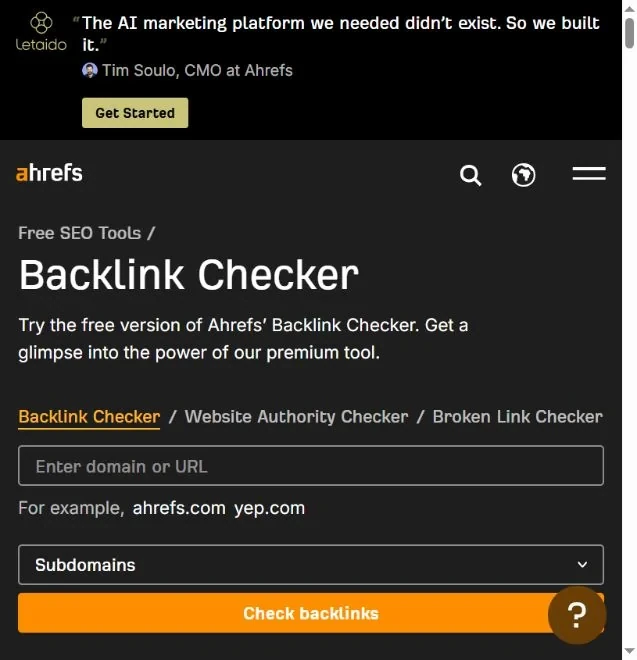
When a link is published, open the public page and test the destination. Check the surrounding wording, business identity and whether the resource described is the resource delivered. Record the actual URL rather than relying on a screenshot or email confirmation.
Inspect the link relationship where it matters for reporting, but do not harass the publisher to remove a legitimate sponsored or nofollow attribute. Make sure your own destination returns a usable page without an unnecessary redirect chain, login requirement or broken download.
Open full screenshot
Step 10 Measure business value and maintain the asset
Monitor referral visits where measurable, relevant enquiries and the quality of conversations. Keep a note of attribution limits: customers may see a reference and contact you later through another channel. Do not add those customers to an outreach success total without evidence.
Recheck the destination and important referring pages periodically. Update the resource when the underlying product, process or requirement changes. If you remove it, decide whether an equivalent resource exists before redirecting. A generic homepage redirect can disappoint people who followed a specific recommendation.
A practical first month
In week one, audit important existing references and identify a small set of genuine relationships. In week two, prepare or improve one useful resource. In week three, send a limited number of reviewed, relevant requests. In week four, verify any published references and record responses, referral quality and unanswered questions.
This is an operating example, not a guarantee of links in four weeks. Some partner processes take longer and some publishers will not respond. The purpose is to create a repeatable, respectful process with evidence rather than an impressive-looking submission count.
Frequently asked questions
Are directory links enough for off-page SEO
Accurate relevant listings can support discovery, but they are not a complete off-page strategy. Combine genuine business relationships, useful resources and reputable references. The directory guide in this batch covers submission workflows separately so this article can focus on earned opportunities.
Should every backlink use my target keyword
No. Let the publisher use wording that makes sense for its readers. Brand names, resource titles and descriptive references can all be natural. Forcing the same commercial phrase into unrelated contexts is a warning sign rather than an objective.
How many links do I need to rank
There is no reliable universal number. Search results depend on many factors, and link counts do not describe relevance or quality. Focus on serving the reader and measuring the business effect of the work.
Your next action
Choose five genuine relationships and one resource worth sharing. Audit their fit before writing any messages. If you need help preparing the resource or evaluating the website destination, scope that through SEO services with a clear evidence and approval process.
Sources and verification
Checked 30 October 2026: Google Links report, link relationship guidance, Google link-spam policy, Ahrefs Backlink Checker. Outreach templates and operating schedules are original examples; no messages were sent and no backlink results are claimed.