


Keyword research for small business should end with a decision about which page to create or improve. A long list of phrases is not a strategy if several pages target the same need, the business cannot serve the people searching or the selected term means something different from what you sell.
This walkthrough shows how to turn customer language into a practical keyword map for a UAE service business or online store. You can complete the core research with public search results, your own business records, Search Console and Google Trends. If you also have Keyword Planner or a paid database, add its estimates with the correct country, period and limitations. Do not label a phrase the most searched when you do not have comparable volume evidence.

Step 1 Define a customer and a commercial outcome
Choose one real service or product group. Write who buys it, the problem they are solving, where you can supply it and what a useful next action looks like. A supplier seeking project quotations has a different goal from a retailer selling a standard item online.
Use a hypothetical example: a Dubai company installs office access-control systems. Its useful outcome is an enquiry from someone planning a suitable installation. Searches for an access-control definition can support education, but they are not equivalent to searches for an installer, a compatible reader or a quotation.
Record genuine restrictions. If you do not provide repairs, avoid building a repair page merely because the keyword appears attractive. If you cannot deliver to a country, do not write a page implying that you can. Relevance includes whether your business can fulfil the need after the click.
Step 2 Collect seed phrases from real conversations
Read anonymised enquiries, sales notes, customer questions and your own product categories. Note the terms people use before they understand your professional terminology. Include common abbreviations, model references, compatibility questions and the language used to describe the desired outcome.
Create three columns: customer’s wording, what they mean and the product or service that answers it. For example, “staff entry card system” might map to an access-control installation service. “Reader not recognising card” might indicate a support issue. Do not automatically combine them because the words look similar.
Keep English and Arabic research separate at this stage. A direct translation may not reflect how people search. Ask a competent Arabic reviewer to validate the meaning, commercial context and natural wording before approving Arabic targets. Do not generate dozens of transliterated variants simply to enlarge the sheet.
Step 3 Expand phrases through live search results
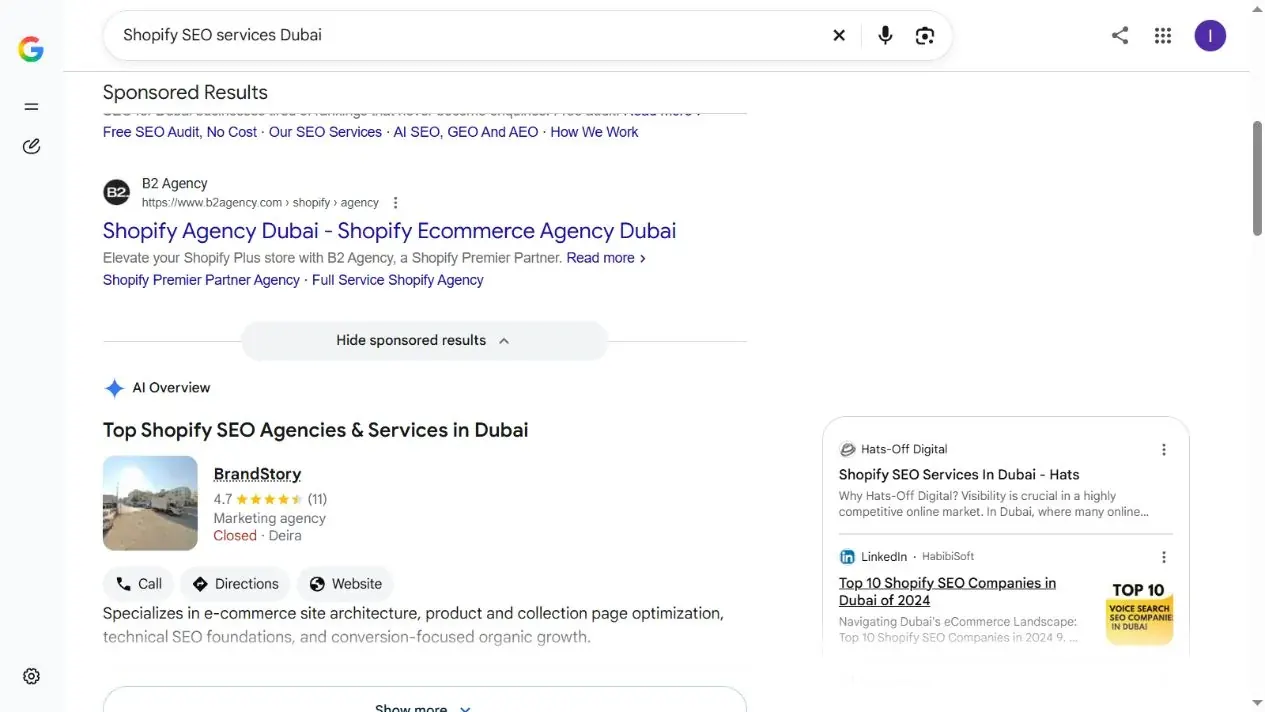
Search one seed phrase and inspect the results that actually appear. Record the query, date, language and apparent search location. Note whether the main results are service pages, product categories, educational guides, directories, videos or map listings. These formats help you infer what the query is trying to accomplish.
Read related questions and suggestions as research prompts, not as verified monthly volumes. Open several relevant results and identify the problems they answer. Do not copy their headings into your article. Instead, list the decisions the reader still needs to make and the evidence your business can provide.
If the results mainly show product categories, a general blog post may be the wrong primary page. If they show instructions, a thin sales page may disappoint the searcher. The result type is a useful signal, but it can vary by location and personalisation. Record your observation rather than presenting it as a permanent rule.
Open full screenshot
Step 4 Add your own Search Console evidence
For an existing site, filter search performance to the relevant page or topic. Review queries alongside country and device. Separate branded terms, informational questions and commercial service or product phrases. A page may already receive impressions for a need that the copy only partly addresses.
Record observed impressions and clicks as your property’s data for that period. They are not the total number of searches in the UAE. Low impressions can mean weak visibility, low demand, a new page or a mismatch; they do not prove that nobody searches for the term.
Use this evidence to find achievable improvements. If a service page already appears for a relevant question, adding a clear answer may be more sensible than creating another competing article. Link to the existing Search Console report guide for report definitions rather than repeating its entire setup process.
Step 5 Compare regional and seasonal interest
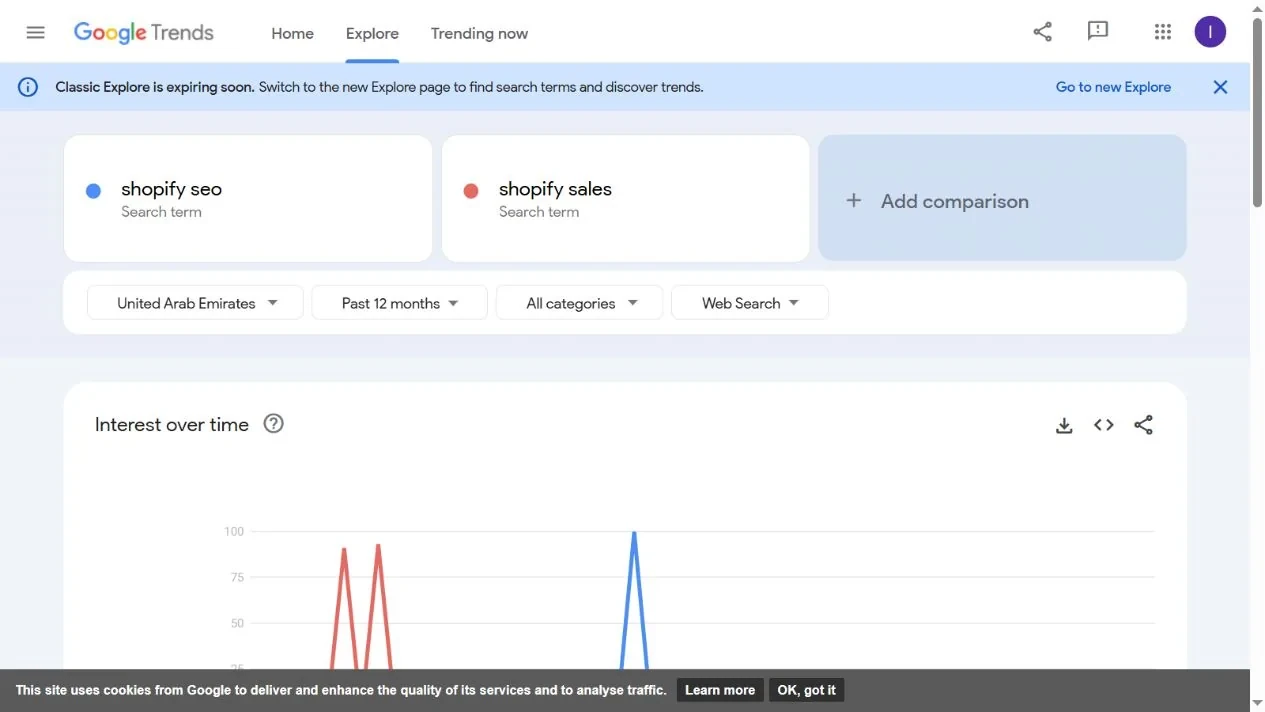
In Google Trends, select the UAE, a consistent date range and the same search type. Compare closely related terms or topics. Check the difference between a literal search term and a topic grouping before drawing conclusions. Use the chart to investigate changes in relative interest and possible seasonality.
Do not treat a normalised index as a count of customers. A term can peak within a low-volume category, while a broad term can attract many people outside your market. When a comparison has insufficient data, retain that limitation in your notes. Try a broader parent topic to understand context without substituting its popularity for the narrower phrase.
Open full screenshot
Step 6 Add volume estimates when a suitable tool is available
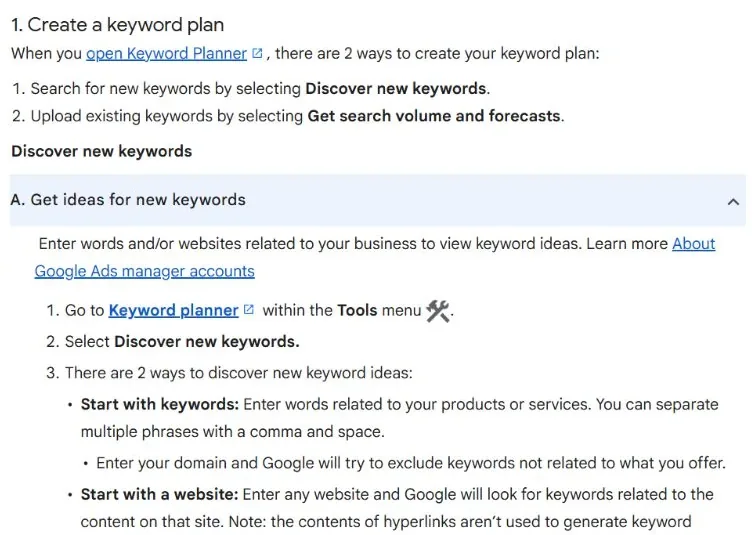
If you have access to Keyword Planner, open the keyword planning area, choose the discovery workflow and enter related seed phrases. Set the intended location and language, review the network setting and keep the date range consistent. Export the relevant ideas with their displayed metrics.
Compare like with like. A global estimate from one tool and a UAE estimate from another are not a fair popularity comparison. Distinguish advertising competition from organic ranking difficulty. A high advertiser bid can suggest commercial interest, but it does not prove the organic keyword will be easy or profitable for your business.
If the tool shows a range, preserve the range. If a phrase has no available estimate, write “not available” rather than zero. Do not activate an advertising campaign just to create a keyword worksheet. Where account setup or billing is required, treat that as a separate business decision.
Open full screenshot
Step 7 Group keywords by the answer they need
Group phrases that a single strong page could satisfy. “Access-control installation Dubai” and “office door access system installer Dubai” may belong together if the same service page genuinely answers both. “How to choose an access-control reader” is a different informational task and may justify a supporting guide.
Use the search results and the customer’s decision as the grouping test. Similar wording can still have different intent, while different wording can describe the same need. Avoid creating separate pages for every spelling, abbreviation or singular and plural variation.
Build one primary page per meaningful intent group. Mark supporting articles as supporting, and link them to the service or category page when the next step is relevant. The goal is a coherent route from research to decision, not a collection of pages competing for the same query.
Step 8 Score opportunities transparently
Use a simple editorial score rather than pretending to calculate Google’s ranking formula. Give each group a low, medium or high rating for business fit, evidence of demand, ability to provide a useful answer, overlap risk and implementation effort. Add a short reason for each rating.
| Candidate | Intent | Best page type | Practical decision |
|---|---|---|---|
| Access control installation Dubai | Find a provider | Service page | Target only if the business genuinely supplies this service. |
| How to choose an office access reader | Research a purchase | Guide | Explain compatibility and selection with verifiable examples. |
| Brand name login | Reach an existing account | Navigation | Do not target unrelated third-party login searches. |
| Access reader troubleshooting | Fix a fault | Support guide | Publish only if the business can provide accurate instructions. |
For a small business, a specific commercial query with a useful answer may deserve attention before a broad phrase with a much larger estimate. Do not force the UAE or Dubai into every keyword when the topic is platform-specific and the same answer applies globally. Add regional detail where it changes the decision.
Step 9 Build the final page brief
Each approved brief should contain the primary keyword, supporting questions, reader, intent, page type, proposed URL, existing page to update if relevant, evidence needed, related service and measurement plan. Record the closest existing article so the writer knows what not to repeat.
Write a working title that states the task clearly. Place the main phrase naturally in the title and opening explanation where it fits. Do not set a keyword-density target or repeat an exact phrase in every heading. Include the terms required to explain the subject accurately, even when they are not on the keyword sheet.
Decide what makes the article useful beyond a generic overview: a worked calculation, a genuine screenshot, a submission form, a troubleshooting decision or a reusable worksheet. A keyword can help people discover a page, but the page still needs to complete the task.
Step 10 Review results after publication
Keep the publication and significant-update dates. Once the page has meaningful search data, inspect the queries it appears for and whether the reader’s next action is working. Allow for indexing, demand and sample-size limitations before interpreting early changes.
If the page attracts the wrong intent, adjust the scope or map it to a different page rather than adding unrelated paragraphs. If two pages compete for the same need, compare their purpose, links and performance before considering consolidation. Do not delete a useful page only because one query moved during a short period.
Frequently asked questions
Should I always choose the keyword with the highest search volume
No. Volume without customer fit can bring irrelevant visits. Choose a target the business can answer well and connect to a useful outcome. Use volume as one input, alongside intent, competition, existing coverage and the quality of evidence you can provide.
Can I research keywords without a paid tool
Yes, using customer language, search results, Trends and your own Search Console data. Be clear about what those sources cannot prove. Without comparable volume estimates, describe your keyword as an evidence-based editorial choice rather than a confirmed highest-volume phrase.
Should English and Arabic use the same keyword map
They should support the same business strategy, but each language needs its own search-intent check and natural wording. Where the pages are equivalents, implement the correct language relationship; do not assume literal translation alone creates a useful local page.
Your next action
Choose one commercial topic and complete the keyword worksheet before drafting. If you need help turning the research into a practical page structure, use SEO services. Ask to see the intent evidence and overlap check, not just a list of impressive-looking volumes.
Sources and verification
Checked 30 October 2026: Keyword Planner workflow, keyword refinement and settings, Google Trends, Search Console performance report, people-first content guidance. All business examples are hypothetical and no search volumes have been invented.