

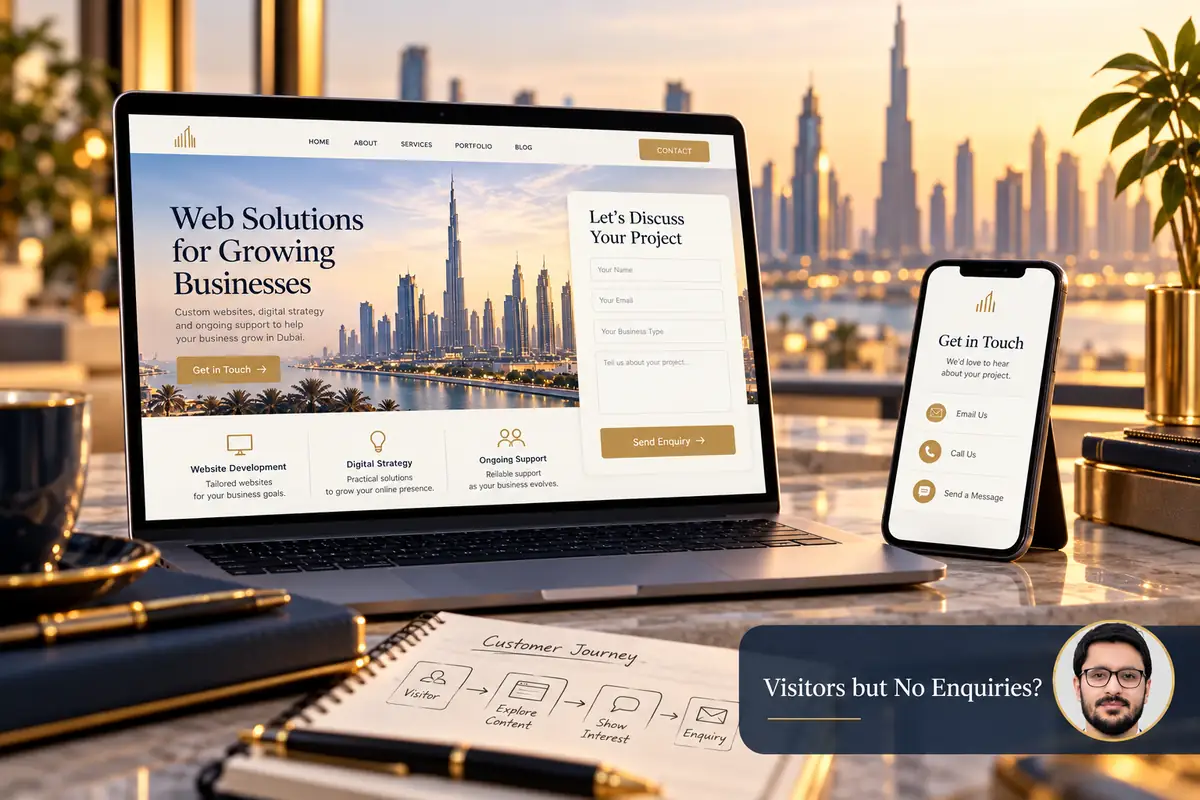
Website traffic and useful enquiries are different things. Visitors may arrive looking for information, comparing options or following an advertisement that does not match your offer. Before buying more traffic or commissioning a redesign, find out where the enquiry journey breaks.
For Dubai service businesses, a useful investigation connects the search or campaign, the landing page, the contact method and the team’s response. This guide explains what to check without assuming that every visit should become a lead.
1. Confirm the problem is real
Compare analytics with actual form entries, inbox messages and CRM records. A broken event can make working enquiries look absent. Conversely, tracking a button click as a lead can make results look stronger than the number of genuine conversations.
Google Analytics uses events to measure interactions, and important events can be marked as key events. Its event documentation is a useful reference when checking your implementation. Decide what your business means by an enquiry before interpreting a report.
2. Check whether visitors need your service
Review the pages and campaigns that attract people. Someone researching a definition has a different intent from someone requesting a quote. A broad campaign can attract visitors outside your service area, budget range or specialism.
Read the promise made before the click. If an advertisement promotes Shopify support but leads to a generic homepage, visitors may struggle to identify the relevant offer. Match the page to the question, explain who it is for and avoid hiding important limitations.
- Check location and device patterns where reporting supports them.
- Review the wording of priority advertisements and search pages.
- Separate educational visits from commercial landing-page visits.
- Compare qualified conversations rather than raw traffic alone.
3. Make the offer understandable
Ask someone unfamiliar with your business to explain the page after a short review. Can they say what you do, who you help and what happens next? Replace vague claims with concrete services, relevant examples and a clear next step.
Use genuine project work and accurately attributed feedback. Explain your process and the information needed for a useful quote. You do not need to publish an unrealistic fixed price for every project, but visitors should understand how to start the conversation.
4. Test the contact method yourself
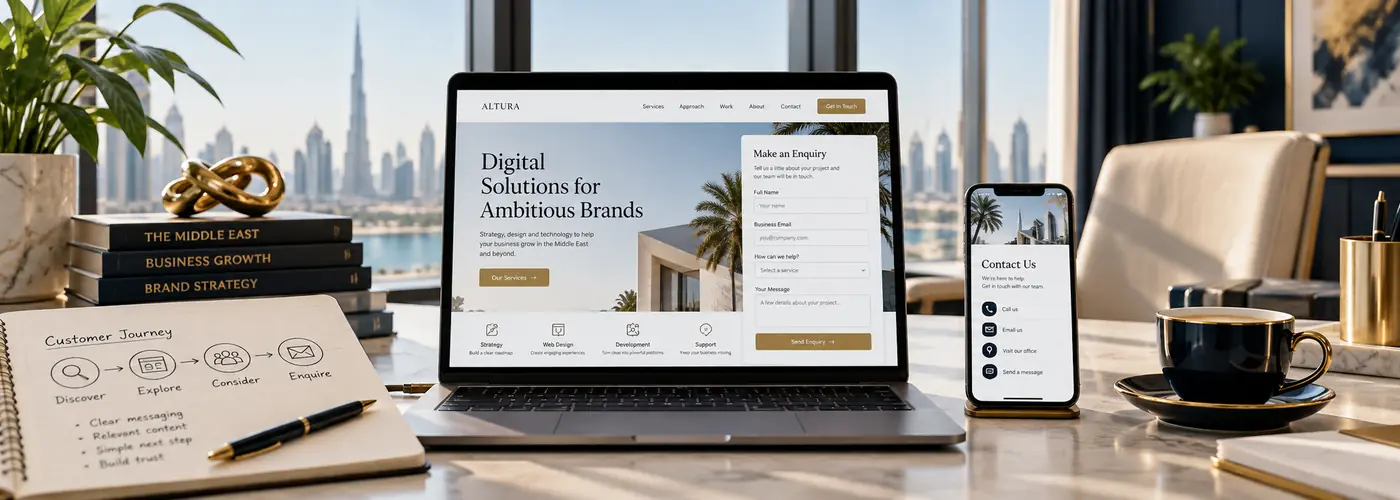
Submit a clearly labelled enquiry on a real phone. Try the country-code selector, a realistic email address and a longer project description. Check whether required-field messages are readable and whether entered information survives an error.
Confirm receipt at the destination, not just the appearance of a thank-you message. Test telephone, WhatsApp and booking links. If several team members handle enquiries, agree who owns each route so messages are not overlooked between inboxes.
5. Reduce unnecessary friction
Ask for information needed to respond, not a full procurement questionnaire before any conversation. Make optional fields visibly optional. Explain expected next steps and avoid unclear consent wording or misleading urgency.
Check mobile spacing, contrast, keyboard behaviour and page speed. A sticky header should not cover the enquiry button, and a popup should not prevent someone from completing a form. Review these elements as part of one journey rather than isolated design details.
6. Review the follow-up process
Record where enquiries arrive, who responds and what happens when the main contact is unavailable. A technical website improvement cannot compensate for messages that remain unanswered or receive irrelevant replies.
Change one meaningful part of the journey at a time and monitor qualified enquiries over a suitable period. Use customer feedback alongside reporting, especially when traffic is too low for reliable comparisons. Avoid declaring success from a handful of visits.
A practical conversion-audit checklist
Audit one priority landing page from arrival to staff follow-up. Record the URL, device, traffic source, expected action, observed problem and owner for each failed check.
- Intent and journey: compare the search or advertisement with the page headline. Can the visitor find the promised service without returning to the menu?
- Calls to action: use a specific next step, such as requesting a project quote. Check its destination and explain what happens after the click.
- Forms and WhatsApp: test an invalid entry, a corrected submission and the receiving record through an approved test process. A WhatsApp click must open the intended number; it does not prove a message was sent.
- Mobile and speed: check the keyboard, field errors and sticky controls. Measure the actual landing page, not just the homepage, and prioritise delays that block the enquiry.
- Trust: show relevant work, accurate business details and genuine reviews. Remove claims your business cannot substantiate.
- Measurement: compare one accepted test submission with its analytics event and backend record; check for duplicate events before interpreting conversion rates.
The current project enquiry form provides a real interface to inspect for phone-field alignment, service selection and validation spacing. Its appearance alone is not evidence of email delivery. Use web development support for a broken workflow, or scope a website redesign when the wider journey needs changing.
Frequently asked questions
Should I redesign the entire website?
Not automatically. If the offer is clear and the platform works, a focused landing-page or form improvement may be sufficient.
Is a WhatsApp button enough?
It can be useful, but visitors may prefer a form, email or booking option. Provide routes your team can maintain and respond to consistently.
What is a good enquiry rate?
There is no useful universal target for every business. Intent, traffic source, service price and the definition of a qualified enquiry all affect the comparison.
Explore business website design or website redesign support. For selecting help, read how to choose a web developer in Dubai. Share the page and the enquiry problem for a focused discussion.